Friday, September 09, 2005

UN Study shows that inequality is key to the fight of global poverty

Inequality 'key to poverty fight'
When rich country leaders talk of fighting poverty, the emphasis is often on improving economic growth in their poorer neighbours.

But according to a new report from the United Nations, that alone will fail to produce meaningful poverty reduction.

Instead, it says, countries need to focus on reducing inequality - between rich and poor, between men and women and between regions.

Rich states also need to give more aid and improve its quality, the UN says.

Going backwards

Each year, the United Nations Development Fund (UNDP) releases its huge Human Development Report, designed around a list which rates countries not by economic power but by a series of indicators reflecting quality of life.

Since 2000, it has also covered progress towards the UN's Millennium Development Goals (MDGs), which include halving poverty, cutting child mortality and providing clean water and sanitation.

This year's report shows that for 450m people, conditions have deteriorated over the past fifteen years.

Of the 18 countries in that category, 12 are in sub-Saharan Africa, their plight the result partly of the HIV/Aids pandemic.

Unequal development

Inequality is a key factor in whether the MDGs are being achieved, the report says.


The poorest 10% of Brazilians are poorer than their counterparts in Vietnam, a country with a far lower average income
Kevin Watkins, HDR author

On one level, international inequalities play a part, with the poorest 40% of the world's population sharing only 5% of global income.

But the report's author, Kevin Watkins, says that inequalities within countries are just as big a problem.

"Anybody questioning whether income distribution matters might reflect on the fact that the poorest 10% of Brazilians are poorer than their counterparts in Vietnam, a country with a far lower average income," he says.

Brazil is ranked 63 on the Human Development Index, while Vietnam is number 103.

The report also points to success in Bangladesh at reducing infant mortality - well ahead of similar efforts in high-growth countries such as China and India.

And females are often getting a worse deal than males, it says, limiting the positive effects of economic development.

In India, for example, half again as many girls die between the ages of one and five as do boys.

Responsiblities for the rich

Elsewhere, the report says that poorer countries need to work harder on issues such as corruption - and richer countries have to strengthen their commitment to keep their end of the development bargain.

Aid needs to be better targeted, more predictable, with fewer strings and better co-ordination between donors.

And trade and security are also key issues, with the current trade round needing to live up to its development rhetoric - instead of, as at present, seeing agricultural subsidies actually increase.

Peace-making and peace-building efforts also need to be a higher priority, the UNDP says, noting that poorer countries are much more likely to descend into civil war than richer ones.

"What is clear is that poverty is part of the cycle that creates and perpetuates violent conflict - and that violent conflict feeds back to reinforce poverty," the report says.

There is a direct incentive for rich countries to help break the cycle: the risk of creating safe havens for terrorist and criminal groups.

To do so, the UNDP argues, rich countries need to cut back on flows of small arms and give more aid to conflict-prone countries - countering a tendency to concentrate aid on "success stories".

Resource wars

But they also need to get tough on natural resource mismanagement, the UNDP argues.

The call follows a string of UN reports into the Democratic Republic of Congo, where a desire to capture mineral and other resources among neighbouring countries and their client militias has perpetuated civil strife which has killed more than 3 million people.

Transnational companies based in rich countries need to be more transparent in their dealings, the UNDP says.

"The international legal framework proposed by the British government-sponsored Commission on Africa to ensure that corrupt pracitices by transnational companies overseas are prosecuted at home - as already practised under US law - should be developed as a priority," it says.

Tuesday, September 06, 2005

Why can't the US take care of its own victims?

I think this is a very interesting article. Why does the US not have the money to pay for relief efforts after Hurricane Katrina? A big part of the reason certainly seems to be that the devestation was just so massive it would have been difficult to have that kind of money stowed away. But still, perhaps a small percentage of our budget to develop nuclear weapons would suffice? During the entire Bush presidency, spending has drastically gone up for the military in general, which accounts for almost half of our $1.2 trillion federal budget. Anyway, here is the BBC story headline and link:

The Red Cross is appealing for people overseas to contribute money to its Hurricane Katrina Appeal. But why does the world's richest nation need handouts?

Also, look online to see plenty of stories about how the Bush Admin has consistently cut spending on disaster relief, at times in the affected areas. Among other things (like not responding to Governor Blanco's request in advance for expidited emergency assistance), this shows another failure on their part to take care of the American people. A good place to start reading about this is here.

Katrina's real name

Perhaps this editorial is a tad overly causal, but good to think about as we decide how to deal with future natural disasters like Hurricane Katrina. props to sam for sending it.

Another great blog...


check out this blog for lots of discussion about current political events!

An awesome NJ program to help make your home more energy efficient.

The NJ Clean Energy Program is a recent initiative by the state to make strides towards environmental sustainability by encouraging us to make our homes more energy efficient.

In short, it provides huge discounts on the cost* for the installation of solar electric power technology on your house. There are also discounts for more efficient air conditioners, and a number of other possibilities such as better lamps and hot water generators.

For the solar roof, the government buys back the unused power that is saved from your new roof, which I've been told by one of the project founders can make you about $1,000 per year or more. It is estimated that the initial investment can be paid off in about 7 years, after which point you begin to earn revenue on your house.

Read more about how you can get involved.

Don't own a house or air conditioner? Pass this information on to your family and friends who do!

Also, if any of you have any experience with the program, please post any information you think might be helpful to people who are thinking of getting started. Kelly...any thoughts?

*It is also possible to have all of these things installed for free if your annual income is below 175% of the federal poverty line. This is a positive step by the state in recognizing that federal poverty criteria are not adequate measures of true poverty.


Find out your impact on the Earth

Take this short quiz (about 12 questions) and get a rough estimate of what your impact is on the environment (otherwise known as your ecological footprint).

Find out how many planets we would need if everyone lived like you. Then find out ways to reduce your footprint. :)

An easy way to support fair working conditions, the environment, and animal well-being.

Yesterday I shopped at Vegan Unlimited, an online store that sells goods that were made without harming animals and with an eye towards fair working conditions for those who produce them and for the environment which we all share.

Although I have to admit I'm not vegetarian, I have been making efforts to reduce my meat consumption lately. Primarily, my concern is environmental sustainability, but certainly I am no fan of animal suffering as well.

If anyone has relatively brief but informative links to send on sustainability as it relates to vegetarianism, please post them here so we can all read. :)

Sunday, September 04, 2005

Latest Myths and Facts on Global Warming

Setting the Record Straight on Climate Change
4/15/2005

A vast majority of climate scientists agree that global warming is happening and that it poses a serious threat to society. They also agree that it is being caused largely by human activities that release greenhouse gases, such as burning fossil fuels in power plants and cars and deforesting the land. These highlights -- and the full full report -- lay out some common myths and misunderstandings regarding climate change.

MYTH: Global warming can't be happening, since winters have been getting colder.
FACT: Winters have been getting warmer. Measurements show that Earth's climate has warmed overall over the past century, in all seasons, and in most regions. The skeptics mislead the public when they bill the winter of 2003-2004 as record cold in the northeastern United States. That winter was only the 33rd coldest in the region since records began in 1896. Furthermore, a single spell of cold weather in one small region is no indication of cooling of the global climate, which refers to a long-term average over the entire planet.

MYTH: Satellite measurements of temperature over the past two decades show a much smaller warming in the atmosphere than is measured by thermometers at the surface. This contradicts global warming predictions based on climate models.
FACT: Recent research has corrected problems that led to underestimates of the warming trend in earlier analyses of satellite data. The new results show an atmospheric warming trend slightly larger than at the surface, exactly as models predict.

MYTH: The global warming over the past century is nothing unusual. For example, the Medieval Warm Period (MWP), roughly from A.D. 1000 to 1400, was warmer than the 20th century. This indicates the global warming we are experiencing now is part of a natural cycle.
FACT: Ten independent scientific studies all have found a large 20th-century warming trend compared to temperature changes over the past millennium or two. Uncertainty exists as to exactly how warm the present is compared to the MWP. Some studies have received valid criticism for possibly underestimating the magnitude of longer-lasting, century-scale temperature changes, such as the warming during the MWP. However, other studies, using different methods, still find no evidence of any period during the last 2,000 years that was warmer than the 1990s. Most importantly, any uncertainty about whether the present is warmer than the MWP has little effect on the finding that humans likely have caused most of the warming over the past 50 years. A separate body of studies has provided the main evidence for this finding. (See the Myth on causes of warming.)

MYTH: Human activities contribute only a small fraction of carbon dioxide (CO2) emissions, far too small to have a significant effect on the concentration of the greenhouse gas in the atmosphere.
FACT: Before the Industrial Revolution, the amount of CO2 emitted from large natural sources closely matched the amount that was removed through natural processes. That balance has now been upset by human activities, which since the Industrial Revolution have put twice as much CO2 into the atmosphere as can be readily removed by the oceans and forests. This has resulted in the accumulation of CO2 to the highest levels in 420,000 years.

MYTH: The Earth's warming is caused by natural factors like increased sunlight and sunspots or decreased cosmic rays, not by greenhouse gases (GHGs).
FACT: Modeling studies indicate that most of the warming over the past several decades was probably caused by the increase in human-produced GHGs. Climate models have difficulty reproducing the observed temperature changes over the past 150 years unless they account for the increase in GHGs as well as natural factors, such as sunlight and volcanic eruptions, and changes in the amount of human-produced sulfate particles, which cool the planet. Satellite measurements of the intensity of sunlight exhibit little or no trend over the past 25 years, when there was rapid warming on Earth. The purported correlations between the amount of cosmic rays and Earth's temperature are the result of flawed analysis methods.

MYTH: The warming observed during the past century was caused by urbanization (urban heat island effect).
FACT: Urbanization does increase temperatures locally, affecting thermometer readings in certain areas. But the temperature data used in trend analyses are adjusted to remove any bias from urbanization. In any case, urbanization has an insignificant effect on global temperature trends.

Read the full report, The Latest Myths and Facts on Global Warming.

Adobe Acrobat required
MYTH: Models have trouble predicting the weather a few days in advance. How can we have any confidence in model projections of the climate many years from now?
FACT: Climate prediction is different from weather prediction, just as climate is different from weather. Models are now sophisticated enough to be able to reproduce the observed global average climates over the past century as well as over other periods in the past. Thus, scientists are confident in the models' ability to produce reliable projections of future climate for large regions. Furthermore, climate assessments typically consider the results from a range of models and scenarios for future GHG emissions, in order to identify the most likely range for future climatic change.

MYTH: The science behind the theory of global warming is too uncertain to draw conclusions useful to policy makers.
FACT: The primary scientific debate is about how much and how fast, rather than whether, additional warming will occur as a result of human-produced GHG emissions. While skeptics like to emphasize the lower end of warming projections, uncertainty actually applies to both ends of the spectrum--the climate could change even more dramatically than most models predict. Finally, in matters other than climate change, policy decisions based on uncertain information are made routinely by governments to ensure against undesirable outcomes. In the case of global warming, scientists have given society an early warning on its possibly dangerous, irreversible and widespread impacts.

MYTH: Global warming and increased CO2 would be beneficial, reducing cold-related deaths and increasing plant growth ("greening the Earth").
FACT: If society does not limit further warming, the beneficial effects probably will be heavily outweighed by negative effects. Regarding cold-related deaths, studies have indicated that they might not decrease enough to compensate for a significant increase in heat-related deaths. Even though higher levels of CO2 can act as a plant fertilizer under some conditions, they do not necessarily benefit the planet, since the fertilization effect can diminish after a few years in natural ecosystems as plants acclimate. Furthermore, increased CO2 may benefit undesirable, weedy species more than others.

MYTH: Society can easily adapt to climate change; after all, human civilization has survived through climatic changes in the past.
FACT: While humans as a species have survived through past climatic changes, individual civilizations have collapsed. Unless we limit GHGs in the atmosphere, we will face a warming trend unseen since the beginning of human civilization. Many densely populated areas, such as low-lying coastal zones, are highly vulnerable to climate shifts. A middle-of-the-range projection indicates the homes of 13 to 88 million people would be flooded by the sea each year in the 2080s. Many ecosystems and species already threatened by other human activities may be pushed to the point of extinction.

MYTH: CO2 is removed from the atmosphere fairly quickly, so we can wait to take action until after we start to see dangerous impacts from global warming.
FACT: Global warming cannot be halted quickly. CO2 and other GHGs can remain in the atmosphere for many centuries. Even if emissions were eliminated today, it would take centuries for the heat-trapping GHGs now in the atmosphere to fall to pre-industrial levels. Only by starting to cut emissions now can humanity avoid the increasingly dangerous and irreversible consequences of climate change.

Copyright © 2005 Environmental Defense.
All Rights Reserved.

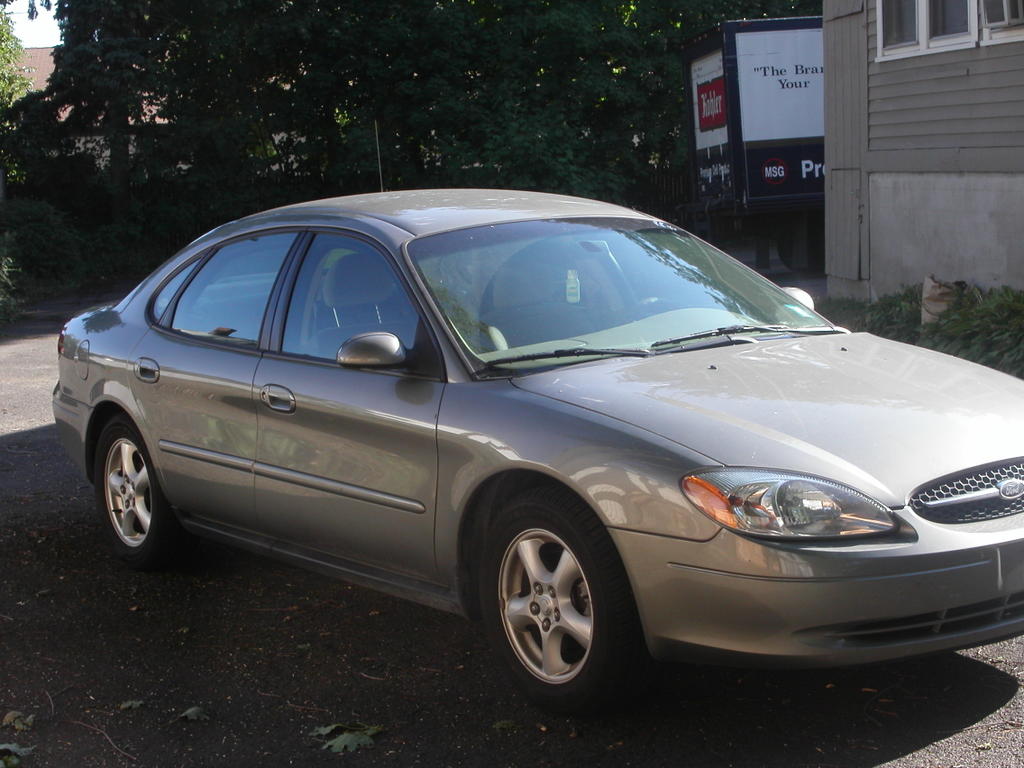
For Sale: 2003 Ford Taurus SE 4-Door Sedan 4 (58,500 Miles) - $7865


I am selling my Taurus because I'm going abroad September 22nd. It's in excellent condition, has never been in an accident, has passed inspection until 2007, and only has 58,500 miles (mor
e info below the specs).

Specs are:

Automatic Transmission
V6 3.0 Liter Engine
Forward Drive
Keyless Anti-theft Entry (with extra set of keys)


Dual Front Air Bags
Front
Side Air Bags
Air Conditioning
Single Disc CD Player
AM/FM Stereo

Cruise Control
Power Steering
Power Windows

Power Door Locks
Power Driver's Seat
Tilt Steering Wheel
Alloy Wheels
Two-toned interior

Additionally, I just had the oil changed today, including a new oil filter, air filter, and cabin air filter, and all fluids topped off.

I'll even throw in my roadside emergency kit (including jumper cables), two 48" bungy cords, a large ice scraper with brush, a leather organizer for the driver's flip up mirror, and a map of the New York area. All of these items have either barely been used or are in good condition.

The Kelly Blue Book Private Party value for this vehicle is listed as $7,965 (www.kbb.com). I've already knocked off $100, and am willing to negotiate a bit more. Please contact me soon. Thanks!

World Mobilizes to aid US victims

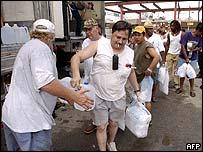
More than 44 foreign governments and international organisations have offered aid to help with the Hurricane Katrina relief effort.

Sri Lanka and Indonesia, who were recipients of US assistance after the tsunami, were among the list of potential donors.

Cuba and Venezuela put aside their differences with the Bush administration to offer assistance.

The US state department said all the offers were being examined.

Returning a favour

President Hugo Chavez of Venezuela - a major oil exporting country - said he had offered to send cheap fuel.

The state department has not decided whether to accept it.


The United States is so often at the forefront of international aid efforts to help less fortunate nations
Foreign Minister Alexander Downer
Singapore sent Chinook helicopters following a request by the US to Fort Polk, Louisiana, to help to ferry supplies and undertake airlift missions.

Israeli Prime Minister Ariel Sharon wrote to President George Bush offering medical teams, saying they could be ready within 24 hours.

Sri Lanka said it was donating $25,000 (£13,500) to the American Red Cross, while Japan has pledged $200,000 and Australia, $8m (£4.3m), to the charity.

"The United States is so often at the forefront of international aid efforts to help less fortunate nations," Foreign Minister Alexander Downer said.

Developing nations, normally recipients of US aid, offered to become donors, such as Honduras, Guatemala and Jamaica.

The Paris-based International Energy Agency (IEA), representing 26 countries, agreed to release the equivalent of two million barrels of oil per day from emergency reserves.

The extra supply is aimed at helping the markets deal more effectively with the disruption caused by Hurricane Katrina, said the IEA.

Story from BBC NEWS:
http://news.bbc.co.uk/go/pr/fr/-/1/hi/world/americas/4210264.stm

Published: 2005/09/02 22:18:07 GMT

© BBC MMV

Saturday, September 03, 2005

Viajando a México!


After my wonderful experience in Antigua, Guatemala, I've been anticipating a return to Latin America, which I have now decided will commence on September 22nd. At the suggestion of a friend, I'm heading down to a relatively small colonial city called Guanajuato, birthlplace of famed artist Diego Rivera and to critical struggles in the fight for Mexican independence. I will be living with a local family and participating in some group language classes in the mornings. During the afternoons and evenings, I will be attending all sorts of events at the huge multicultural Cervantes International Festival for the first few weeks in October.

At some point before mid-November, I will take the 4-hour bus ride over to Guadalajara, the second-largest city in Mexico and birthplace of the mariachi, tequila, the sombrero, rodeos, and the Mexican Hat Dance. I may head over in late October to catch the end of their annual, month-long cultural festival as well. This will also give me time to explore Guadalajara more before I begin a month-long, intensive TEFL certification course there beginning in mid-November.

During the course I will be communicating with a potential employer at a university in Cali, Colombia for a position beginning in January. If not, I will probably look for work in Mexico or South America. I hope to teach part time to leave time for volunteering and immersing myself in the culture and language. In addition to gaining a heightened awareness of myself, various aspects of Latin Cultures, and the world, I hope to become conversational at a relatively high level of Spanish to aid in my social work in the future.

For those of you who are interested, I have some ideas about possible volunteer projects in various parts of Latin America in the future, ranging from environmental sustainability to working with orphans. If you're interested in joining me for a project or have an idea of your own, or if you just want to meet up with me somewhere sometime, let me know and we'll work something out! :)

As for the US, I'll be back for the winter holidays and will take it from there! :)

Friday, September 02, 2005

Ben (from Ben & Jerry) Plays with Oreos and BBs

The oreos make this cartoon entertaining. At the same time Ben shows you visually how much we spend on the military versus food and schools for poverty-stricken kids.

And in this 2-minute video, Ben gives visually demonstrates the ridiculous amount of money the US uses just to build nuclear weapons.

What is "The Meatrix"?

This cartoon movie is sure to give you laughs and shudders...check it out!

NJ Student Loan Forgiveness Program


This is a loan forgiveness program for social workers who work in government or government contracted agencies. You can have up to $5,000 in loans forgiven for each year of work. Find out more info and thank Governor Codey with the link above!

A View of the US from the Outside


Bully Tactics Not Serving U.S. Well
By: Jesse Jackson - Chicago Sun-Times

Tuesday, Aug 30, 2005


CARACAS, Venezuela -- To get a good sense of America in the world, it helps to look from the outside in. This week, I traveled to Venezuela to meet with President Hugo Chavez and address the National Assembly. Here's how America appears to many of its neighbors to the South.

Chavez has been elected twice by large majorities. He is a populist champion of the poor in Venezuela. Riding the oil boom -- Venezuela sits on the largest oil reserves of any nation in the hemisphere -- he's seeking to gain a higher percentage of oil profits for his country. He is an ardent nationalist, challenging what he considers U.S. domination of the hemisphere. He has even embraced Fidel Castro, who has made U.S. presidents froth for over 45 years.

Chavez's brash independence irritates the Bush administration. Don Rumsfeld recently traveled through Latin America proclaiming Chavez a threat to stability, suggesting that he was working to destabilize Bolivia. The defense secretary offered no evidence for the charge. Last week on TV, Pat Robertson, the zealous right-wing minister who is a key political ally of President Bush, said if Rumsfeld is right, the United States should "assassinate" Chavez, which would be cheaper than waging another $200 billion war to overthrow him, as in the Iraq fiasco.

Robertson's chilling words echoed across the world. Bush did not rebuke him. The FCC, so quick to react to a bared breast in a Super Bowl halftime, did not open an investigation. Rumsfeld dismissed Robertson's statement, noting that assassination is against the law. Robertson later apologized, sort of, suggesting that kidnapping would do just as well as murder.

Most Americans would dismiss these words as the loony ravings of a right-wing zealot. But consider how this looks from Caracas, or Santiago, or Managua. The Bush administration denounces Chavez as a threat to stability. The same administration proclaims it will act preemptively with military force, covertly or overtly, to eliminate potential threats "before they have formed," in Bush's words. It has unleashed the CIA, used high-tech weaponry to "take out" suspected terrorists, and demonstrated, in Guantanamo and elsewhere, that its agents are prepared to trample laws and treaties.

Throughout the hemisphere, decades of U.S. intervention -- the gunboat "diplomacy" of the early 20th century, the CIA's notorious wars against elected presidents in Guatemala, Chile and Nicaragua, the assassination plots against Castro -- ensure Robertson and Rumsfeld's words are taken very seriously.

In Venezuela, the Bush administration is already seen as implicated in the 2002 coup attempt against Chavez. The Bush White House rushed to recognize the coup leaders one day after they announced Chavez had been deposed, only to discover that the Venezuelan people would defend the democracy that the U.S. administration scorned. Prudence alone makes Chavez take the threat of the president's close political ally very seriously.

America cannot change its history in the hemisphere nor erase the well-founded suspicions that history creates. But it can change the future. Venezuela is our neighbor and should be our friend. Chavez is elected by his people. Venezuela is our fourth-largest source of crude oil. It borders on Colombia and is vital to the ongoing war on drugs.

We need to move from a big stick to a good neighbor policy. Over the past two decades, democracy has spread across Latin America, but so have poverty and inequality. The policies that we've enforced -- the "Washington consensus" -- have failed to work for most poor and working people in the region. Bolivia is unstable not because of Chavez, but because of the policies pursued by Washington and the International Monetary Fund.

Chavez announced a proposal to provide low-cost heating oil to poor communities, schools and hospitals in the United States. With oil prices reaching $70 a barrel, and gas prices exceeding $3 a gallon, and winter on the horizon, this is a plan that I and the whole world can endure.

Americans have to choose -- assassination or engagement, the big stick or the good neighbor. Too many people looking at America from the outside think that choice has already been made the wrong way. It is up to us to prove them wrong.

Original source / relevant link:
Chicago Sun-Times


How much do you know about diversity in education?


Take the Multicultural Education and Equity Awareness Quiz and find out!

Coldplay Supports Fair Trade!

Coldplay Creates Big Noise Over Unfair Trade
27 July, 2005

British rock group Coldplay and Oxfam America are working together to promote awareness of trade rules that keep millions of farmers in poverty.

Coldplay is championing the Make Trade Fair campaign during their "Twisted Logic" tour in August and September. The concerts feature music from their long-awaited third release—"X&Y"—and a call to sign the Big Noise petition. This petition calls on world leaders to change trade rules that keep millions of farmers across the world in poverty.

Coldplay’s 36-date US tour, which began August 4th in Hartford, Connecticut, marks a new level of advocacy for both Coldplay and Oxfam America. In 2003, Oxfam gathered 10,000 Big Noise signatures during Coldplay’s 14-date US tour. This year, Oxfam hopes to get 50,000 signatures.

Before each concert, Coldplay shows a brief video on the suffering caused by bad trade policies and the potential for trade reform to lift millions out of poverty. The video calls on concert-goers to sign the Big Noise petition by using their cell phones to send a text message. Sun Microsystems is providing the technology and support for thousands of anticipated text messages. Oxfam volunteers will also collect petition signatures by hand.

The Big Noise petition has been signed by 7.7 million people globally. Oxfam will deliver the Big Noise to world trade ministers this December at the WTO Ministerial Conference in Hong Kong.

Coldplay front man Chris Martin has seen firsthand the crippling effects of bad trade rules on small farmers after traveling to both Ghana and Haiti with Oxfam.

"How on earth could anybody stand in a field with these people and say that it's the right thing to do to dump their excess produce cheaply on a third world country? It's beyond me. But the truth is, the people responsible haven't talked to the farmers in the areas affected."

In July, Coldplay teamed up with prodigious A-list music stars at London’s Live 8 concert to insist that politicians take steps to end extreme global poverty. And following the Live 8 performance, Coldplay began a series of European shows where they teamed up with Oxfam Great Britain to promote the movement against unfair trade.

© 2005 Oxfam America.
Oxfam America is a member of Oxfam International.

Take the Social Justice Quiz!


Try to guess the answers to the questions before looking!
Also, check out the full 20 Question Social Justice Quiz.


------------------------------
Sample Questions
------------------------------
Q1: Of the 6.2 billion people in the world today, how many live on less than $1 per day, and how many live on less than $2 per day?

Q2: Americans give how much per day in government assistance to poor countries?

Q3: Americans spend how much on soft drinks each day?


-----------------------
Answers
-----------------------
A1: 1.2 billion live on less than $1/day, 2.8 billion live on less than $2/day
A2: 15 cents
A3: 60 cents

Take a look at 17 other social justice questions here.

Myths and Realities of Immigration


The full document has a few bulleted points about each myth and includes citations. Below are just the plain myth/fact statements (about 20 of them).

Immigration and Economics

Myth: Immigrants take jobs from United States citizens.
Reality: Most studies agree that immigrants create more jobs than they fill.

Myth: Immigrants drain the United States economy and are partly responsible for our current economic woes.
Reality: The contributions of immigrant workers, taxpayers, and business-owners are vital to economic growth.

Myth: Immigrants make such heavy use of social services that they are a burden on the United States treasury.
Reality: Immigrants are a net gain for the national treasury, because they pay significantly more in taxes each year than they receive in services.

Immigration and Population

Myth: The United States today has a higher percentage of immigrants than ever before.
Reality: The percentage of immigrants among United States residents was higher at the beginning of the 20th century than it is now.

Myth: The United States has a higher percentage of immigrants than any other country.
Reality: Although the United States numerically has the largest immigrant population of any country in the world, it takes in only 1% of the world’s immigrants, and the U.S. is not even among the top ten countries when immigrant population is counted as a percentage of total population.

Myth: Immigrants bring huge extended families to the United States through “chain migration.”
Reality: So-called “chain migration” is not a real legal loophole, and studies show it doesn’t really happen.

Myth: The United States has too many people and too few economic resources to accommodate more immigrants.
Reality: The United States is still very wealthy and relatively uncrowded.

Immigration and Culture

Myth: Immigrants have nothing to contribute to American society.
Reality: In addition to making major economic contributions, immigrants contribute to society as workers in diverse fields and as responsible community members.

Myth: Immigrants fragment the culture of the United States by refusing to assimilate to an American way of life.
Reality: There is no one American way of life. Immigrants coming to the United States are changed by the experience and simultaneously help to change the United States; this process has built and shaped the country for as long as it has existed.

Myth: These days, immigrants to the United States will not learn English unless forced to by “English Only” laws.
Reality: Already, more immigrants already want to learn English than can find space in English classes. “English Only” laws simply make life more difficult for those who are still learning English.

Immigration & Fear

Myth: Many immigrants are dangerous criminals.
Reality: Most immigrants are responsible, law-abiding people seeking a better life in a new country.

Myth: Immigrants hurt the environment when crossing the borders to enter the country.
Reality: There is no correlation between immigration and environmental degradation. Borders themselves have negative environmental impacts through the border guards and factories that cluster near them.

Myth: Immigrants bring disease.
Reality: Recent immigrants and babies born to immigrants are actually slightly healthier, on the average, than people born in the U.S. and babies born to U.S.-born mothers.

Immigration and U.S. Policy

Myth: The U.S. Constitution doesn’t apply to immigrants.
Reality: The Supreme Court has ruled that every person in the United States-- regardless of immigration status-- is entitled to fundamental constitutional rights. However, the executive and legislative branches of the federal government sometimes fail to uphold these essential legal principles.

Myth: It is not the fault of the United States that people want to leave other countries.
Reality: United States policies, designed with United States interests in mind, have a long history of hurting the peoples and economies of other countries.

Myth: Most immigrants come to the United States illegally.
Reality: Most immigrants are documented under strict legal requirements. Fairly few people enter the country illegally.

Myth: United States immigration policy is fair and just.
Reality: The laws governing immigration to the United States tend to favor people likely to be white and wealthy over those likely to be poor or people of color. Such policies run counter to the fundamental ideals of equality upon which the United States is based.

Myth: Americans oppose immigration.
Reality: Americans, most of whom are descended from immigrants themselves, generally favor laws that would offer the same opportunities their ancestors enjoyed to people from all over the world, regardless of country of origin.

Free Credit Reports are now available!

For a copy of your free credit report, go here:
www.annualcreditreport.com

You don't actually get a free "credit score," which is the number used by many lending agencies. Rather, you are getting a copy of your current and closed credit accounts (e.g. credit cards, loans). You can purchase your score for around $5 from most of the agencies I believe.

You are allowed to receive one report from each of the 3 credit reporting agencies each year (some people just pick one every 4 months so they can essentially receive a free service all year). Equifax is the one most often used to compute your credit score.

To view some common questions about the process, check out this Washington Post article.