just pasting this in for those who are interested...all the links you need are below...spread the word!
--------------
Dear Friends,
For 36 years, Guatemala suffered through an internal armed conflict in which at least 200,000 people were "disappeared" or killed. State-sponsored violence was widespread, entire villages were burned and razed, and rape was commonly used as a weapon of war against women. Numerous investigations have concluded that the vast majority of these human rights violations were conducted by members of the Guatemalan Army or intelligence services.
Today, a decade after the conflict's resolution, many of those responsible have escaped prosecution and now work with the police or private security forces. Perhaps it is no wonder that violence against women continues unabated, and that the perpetrators are virtually never brought to justice.
Human rights groups have documented a sharp increase in the rate of "femicides" or killings of women in Guatemala since the beginning of 2000. As of August 2006, 2,300 Guatemalan women had been murdered, and only 17 cases had been resolved, including both convictions and exonerations. In fact, so few convictions have been handed down that there is almost complete impunity for those who murder women in Guatemala. Investigators mishandle crime scenes and officials blame the victims themselves, often deciding that their murders are not worth investigating because they are deemed to be "nobodies."
The Women's Edge Coalition and the Center for Gender & Refugee Studies have joined together to condemn the institutional acceptance of violence against women in Guatemala. In November 2006, members of the U.S. House of Representatives introduced a resolution calling on the Secretary of State to urge the Government of Guatemala to improve its procedures for investigating and prosecuting crimes of violence against women. Representative Hilda Solis of California re-introduced the resolution (H. Res. 100) in January 2007, and a vote is expected in the House very soon. (A similar resolution is currently being considered in the Senate.)
Join us in asking your representative in Congress to sign on as a co-sponsor of H. Res. 100. To identify and contact your Congressperson in the U.S. House of Representatives, click here; to check and see if your representative is already a co-sponsor of H.Res. 100, click here. If he or she has not yet signed on, you will find a sample message that you can personalize and send below.
The war in Guatemala is long over. It's time for Guatemalan women to enjoy the benefits of peace.
In Solidarity,
Karen Musalo
Director
Center for Gender & Refugee Studies
Barb Gottlieb
Director of Outreach & Membership
Women's Edge Coalition
[SAMPLE MESSAGE]
Dear Representative [name],
During Guatemala's decades of internal armed conflict, state-sponsored violence was widespread, and rape was commonly used as a weapon of war against women. Numerous investigations have concluded that the vast majority of these human rights violations were conducted by members of the Guatemalan Army or intelligence services.
Today, a decade after the conflict's resolution, many of those responsible have escaped prosecution and now work with the police or private security forces. Perhaps it is no wonder that violence against women continues unabated, and that the perpetrators are virtually never brought to justice.
Human rights groups have documented a sharp increase in the rate of "femicides" or killings of women in Guatemala since 2000. As of August 2006, 2,300 Guatemalan women had been murdered, and only 17 cases have been resolved, including both convictions and exonerations. In fact, so few convictions have been handed down that there is almost complete impunity for those who murder women in Guatemala. Investigators mishandle crime scenes and officials blame the victims themselves, often deciding that their murders are not worth investigating because they are deemed to be "nobodies."
I urge you to join your colleagues in Congress in condemning the institutional acceptance of violence against women in Guatemala by signing-on as a co-sponsor of H. Res. 100, which encourages the Guatemalan government to bring an end to these crimes. To co-sponsor H. Res. 100, contact Representative Hilda Solis's office at (202) 225-5464.
The war in Guatemala is long over. It's time for Guatemalan women to enjoy the benefits of peace.
Sincerely,
[name & address]
Sunday, March 25, 2007


An Inconvenient Truth
i know i'm behind the bandwagon on this one, but i just saw An Inconvenient Truth yesterday, and i feel the least i can do is to pass this link along with information about the documentary and things we can do to make an impact.
http://www.climatecrisis.net/
it's truly alarming and i think we all have a responsibility, especially those of us in the US with our generally high-consumption lifestyles. living in the city has made the transportation issue easier for me, i often walk 150 blocks in a day and take mostly buses when not walking. i'm definitely a believer in walking, biking, and public transportation when possible. the only change i'd like to make is to cut down on flying, which i think i have mostly minimized by taking buses down here when possible and staying in one place for a while. cutting down on water use has been fairly easy and i'm getting better about turning off lights, computers, and appliances. we use natural gas here and don't keep the pilot light on all day so that's also a plus. i'll have to cut down on my meat consumption though, which has went back up again recently, but every day is a new day.
heading out of bogotà
well, another traveling chapter is coming to a close. i arrived in bogotà last august. i had said i wanted to live for a while in a big city, and now i've had that experience.
i know the city and it's various transportation systems fairly well, and getting to most places is more of a problem of traffic and timing than actually knowing what to do. i live with two other extrajeros, lyndsey and mike, in the oldest part of the city, a colonial area called La Candelaria. it's definitely relaxed compared to the rest of the city, and the museums are interesting. i've seen very little of colombia outside of the city, although i recently took a trip to Villa de Leyva, which was beautiful, and hope to see some other surrounding pueblos such as Paipa and Melgar before heading out.
i've picked up some of the accent, which most people from bogotá are quick to say is the best and most clearest in the world. I'm not sure if I agree with that; rather, it's been another fun accent to learn...new words, new diminutive which they use just a bit (solo un poquitico, claro)...well, actually, it is used so often perhaps it has taken on a new meaning.
in any case, i have also gained some insight into the culture. bogotà is probably the most conservative place i have lived in Latin America so far. there are many formalities in speech, dress, and interaction that, although having seen them elsewhere, seem to be heightened here. i can't quite tell if the beauty salons are used more than in other LA countries here, but i do know that at 5:30am you're just as likely (if not more so) to see a beauty salon up and running as to find a place to buy a piece of bread for breakfast. and walking around with bandages from your recent plastic surgery is not only socially acceptable, but viewed quite positively. taking care of your appearance has been important in all places i've been, but i think caracas and bogotà have been a new sight for me. i hear another city in colombia, cali, is known for their plastic women, but not sure if i will get there before i leave at the end of april. i'm hoping to head to cartegena if i have the time, perhaps some of the pueblos outside of bogotá, and perhaps cali on the way down to ecuador, which is currently where i plan to go next.
the experience in bogotà has been a good experience for me, mostly to remind me of what's most important to me and what i hope to experience and contribute with my life. teaching english to upper middle class professionals has been good for teaching experience, but not where i want to be in terms of a career, which for now i am content not to have. but the exchange of culture and language has been worth the experience, and i'll take the knowledge and skills into future social work. i am currently applying for a month-long volunteer experience doing construction work in a pueblo in ecuador, a couple of hours south of quito. i think that will happen during the month of may, and i should be back in the states for a month or so to do some editing and perhaps research work with a professor of social work who i've been working for the past couple of years. i hope to save a little money during this time and then head off to the US southwest and/or northern Mexico to work with the immigrants and refugees trying to cross the border. some of the projects, such as giving water to undocumented immigrants crossing the border, are quite controversial, although alliances between at least one organization and the border patrol have been formed, and permits have been obtained for the work. i think immigration is an issue i would like to work with in the future, partly because of the experiences i have had in Latin America and partly because I think the issue hits directly at US imperialism. who are we, after all, to deny peaceful access to land that our ancestors and others conquered with all manners of force, rape, biological warfare, slavery, and repression? even if we personally had nothing to do with it, i still feel we should do something to take more positive paths in the future. allowing open access to the US is a radical idea that perhaps not many support, but i find myself supporting it more and more in my thoughts. would our economy suffer or gain? probably both. would economic loss be fair? i believe so. our country and by association, us, have so much compared to the rest of the world, i think we should share more than we do.
in any case, i'm still forming opinions, but i don't foresee a sharp divergence from them in the future. i feel good about the changes to come, and i look forward to them. for now, it's a month more of teaching experience and spending time with the friends i have made, and at least for this afternoon, it's off to make some refried beans, man i miss the food from Mexico!
Thursday, January 04, 2007
responding to the white house's annoying auto-response message
i think i posted this before, but it was filled with errors. in any case, if anyone would like to use the message i have pasted below (or a modified version) to respond to the white house's annoying auto-response email message, please go right ahead. i've pasted the white house's msg first and then my email. also, if you notice any typos or anything, please post them in a comment. take care!
---------------------------------------------------------------------------
the white house's bs...
---------------------------------------------------------------------------
On behalf of President Bush, thank you for your correspondence.
We appreciate hearing your views and welcome your suggestions.
The President is committed to continuing our economic progress,
defending our freedom, and upholding our Nation's deepest values.
Due to the large volume of e-mail received, the White House
cannot respond to every message. Please visit the White House
website for the most up-to-date information on Presidential
initiatives, current events, and topics of interest to you.
In order to better receive comments from the public, a new system
has been implemented. In the future please send your comments to
comments@whitehouse.gov.
Thank you again for taking the time to write.
---------------------------------------------------------------------------
one possible response to the white house's bs...
---------------------------------------------------------------------------
To whom it may concern in White House staff,
Thank you for the response to my correspondence.
With respect to the third sentence of the first paragraph, if the President is truly committed to upholding our Nation's deepest values, I would imagine he is committed to upholding the values of liberty and justice for all. If this is the case, the President's support for free trade policies and his failure to make satisfactory efforts for adequate environmental, labor, and human rights protections reflect, at least to me, that he is not indeed committed to these values. The vast majority of our natural resources and finished products have been and continue to be obtained with the conscious exploitation of people and their lands, usually the most poverty-stricken and vulnerable of all, which is disgraceful, especially considering that our government and corporations have the resources to ensure the aforementioned rights while still remaining competitive in the global economy. This is but one example of the President's failure to respect "our Nation's deepest values." Perhaps it was overlooked by the White House staff because it is overshadowed in the President's and his administration's conscious manipulation of our people to garner support for a dishonest and contrived war.
So, with all due respect to the President, please cordially but firmly ask him to truly stand up for liberty and justice for all (the importance of honesty might be a worthwhile topic of conversation as well). Not only is this the right thing to do, both according to the President's stated religious beliefs and to anyone who believes that exploitation is fundamentally wrong, but also it is important to set an example if we wish for true democracy and justice to take shape in the world and within our own country as well.
Additionally, with all due respect to whoever wrote the automatic response that was sent to me, I ask that you please modify it to reflect the President's true track record in regard to environmental and human exploitation. I find the rhetoric insulting. Further, it is manipulative and dangerous to consciously misinform the public. I am particularly worried about the effect this manipulation might have on the moral and political beliefs of future generations, and, consequently, on their actions as our future leaders.
Thank you for your time and expected cooperation in the matter. Best wishes with becoming more positive and honest leaders of our country. I hope, for the sake of everyone affected by our country's political and economic policies and interventions, that you do.
With the utmost sincerity and good intent,
Your Name, an educated and deeply concerned citizen
---------------------------------------------------------------------------
the white house's bs...
---------------------------------------------------------------------------
On behalf of President Bush, thank you for your correspondence.
We appreciate hearing your views and welcome your suggestions.
The President is committed to continuing our economic progress,
defending our freedom, and upholding our Nation's deepest values.
Due to the large volume of e-mail received, the White House
cannot respond to every message. Please visit the White House
website for the most up-to-date information on Presidential
initiatives, current events, and topics of interest to you.
In order to better receive comments from the public, a new system
has been implemented. In the future please send your comments to
comments@whitehouse.gov.
Thank you again for taking the time to write.
---------------------------------------------------------------------------
one possible response to the white house's bs...
---------------------------------------------------------------------------
To whom it may concern in White House staff,
Thank you for the response to my correspondence.
With respect to the third sentence of the first paragraph, if the President is truly committed to upholding our Nation's deepest values, I would imagine he is committed to upholding the values of liberty and justice for all. If this is the case, the President's support for free trade policies and his failure to make satisfactory efforts for adequate environmental, labor, and human rights protections reflect, at least to me, that he is not indeed committed to these values. The vast majority of our natural resources and finished products have been and continue to be obtained with the conscious exploitation of people and their lands, usually the most poverty-stricken and vulnerable of all, which is disgraceful, especially considering that our government and corporations have the resources to ensure the aforementioned rights while still remaining competitive in the global economy. This is but one example of the President's failure to respect "our Nation's deepest values." Perhaps it was overlooked by the White House staff because it is overshadowed in the President's and his administration's conscious manipulation of our people to garner support for a dishonest and contrived war.
So, with all due respect to the President, please cordially but firmly ask him to truly stand up for liberty and justice for all (the importance of honesty might be a worthwhile topic of conversation as well). Not only is this the right thing to do, both according to the President's stated religious beliefs and to anyone who believes that exploitation is fundamentally wrong, but also it is important to set an example if we wish for true democracy and justice to take shape in the world and within our own country as well.
Additionally, with all due respect to whoever wrote the automatic response that was sent to me, I ask that you please modify it to reflect the President's true track record in regard to environmental and human exploitation. I find the rhetoric insulting. Further, it is manipulative and dangerous to consciously misinform the public. I am particularly worried about the effect this manipulation might have on the moral and political beliefs of future generations, and, consequently, on their actions as our future leaders.
Thank you for your time and expected cooperation in the matter. Best wishes with becoming more positive and honest leaders of our country. I hope, for the sake of everyone affected by our country's political and economic policies and interventions, that you do.
With the utmost sincerity and good intent,
Your Name, an educated and deeply concerned citizen
Wednesday, November 22, 2006
Working in Bogotá
How time flies. I've already been in Colombia for over 3 months. This is the first time I'm spending more than that amount of time in one country. Usually the tourist visas get you up to 90 days. I remember my experiences in Mexico and El Salvador. 3 months is a nice amount of time for making friends and lasting memories, you really get to know the culture more by spending more than a week there like most of the backpackers do. Although backpacking through the whole continent has its advantages, mainly getting to see a ton of places quite quickly, so maybe I'll have to do that some time too. The down side of spending so much time in each place is saying goodbye to friends when I leave. I've kept in contact with many on a limited basis but it's difficult because I've met so many people.
Bogotá has been a different experience for me in many ways. The biggest difference is that I've begun working, teaching English, mostly to working professionals and execs of multinational corporations. Not exactly my ideal job but the only one I can probably get without taking a job away from a local. Even teaching English I'm taking a job away from a Colombian, but at least for this job I have some sort of special ability to do it. I'd love to bartend or wait for a bit just to get to know more people and practice more Spanish. I've continued learning plenty of Spanish in Colombia but I can feel myself progressing much more slowly because I spend the majority of my day speaking English in my classes and with my co-teachers who of course speak English as well. I've recently begun making some efforts to expand my editing business. I put an alright site together but it needs some work. Comments are welcome, and of course if you know anyone who needs editing please do pass it along: www.technical-edit.com.
In any case, in other language news, I've begun some French classes, which was my excuse to get a student visa. Je parle un peu but not much. I've picked up a few extra English classes these past few weeks, and have also been pretty busy looking for apartments with some friends, so I've skipped half my classes haha. Apartment hunting has been frustrating. Unfortunately in Bogotá you actually have to fill out some forms, get some references, and get some co-signers who have property and dinero. The property part is annoying because most people we know rent. In other countries I've been to you can just hand someone some money and move into the place 5 minutes later, which is what we were hoping for here. Ah one of the downsides of development, a more complicated world. In any case, there will probably be four of us living together, we'll make an interesting group, with representation from Canada, England, Colombia, and of course gringolandia.
As for the city, well I've gotten to know it and I've barely gotten to know it. I know my away around the buses and transmilenio (sort of like an above-ground subway system, a bus with it's own lane in the city so it goes faster), and how not to get ripped off by the taxi drivers, who always talk quite politely to you before doign so. The culture is a bit more formal here in Bogotá than some other places I've been, manners are more important, but the same things happen. In Bogotá a taxi driver will tell you "at your service," "with great pleasure," and then overcharge you. In other cities in the country they might not use the same cordiality but they'll take your money all the same. I think I'd prefer the latter, at least I'd be more prepared it was coming. But I'm getting more city savy now so it's all good. As for not knowing the city, I've barely done anything touristy here because I've been busy working. My idea is to expand my editing work because it's more flexible, pays in dollars, and would allow me more time to practice Spanish and do whatever. Teaching English can be annoying because the people who pay well are working professionals and need classes at 6am or as late as 9pm, so you're left with time in the middle of the day to waste and it's difficult to meet up with other people because they're either studying or working regular jobs. Now I understand why TEFL teachers sometimes don't learn Spanish at all when they're down here, they're speaking English all the time.
In any case that's my news for now. Nothing too special I guess. When the apartment and job situations change so will my experiences here. For now, I'll keep on eating bandeja paisa, drinking avena, and dancing vallenato and salsa when I can find a girl to teach me.
Monday, October 09, 2006
Remembering Che's Hopes
Today is 39 years to the day of Che's execution. I may not be for guerilla fighting, but I greatly admire the ideals that he was fighting for, that is, to lessen poverty and injustice, to change the world for the better.
Here is a video with a new version of the old song, Hasta Siempre:
http://www.youtube.com/watch?v=hqYHeX0i0NU&eurl
I'm not sure if the video footage of his body is real...I know their were pictures of his body like that, but not sure about the video...if anyone knows please post a comment.
You can find more info about Che here:
http://en.wikipedia.org/wiki/Che_guevara
Hasta Siempre
Aprendimos a quererte
Desde la histórica altura
Donde del sol de tu bravura
Le puso un cerco a la muerte
Aquí se queda
La entrañable transparencia
De tu querida presencia
Comandante Che Guevara
Tu mano gloriosa y fuerte
Sobre la historia dispara
Cuando todo santa clara
Se despierta para verte
Vienes quemando la brisa
Con soles de primavera
Para plantar la bandera
Con la luz de tu sonrisa
Tu amor revolucionario
Te conduce a nueva empresa
Donde esperan la firmeza
De tu brazo libertario
Seguiremos adelante
Como junto a ti seguimos
Y con Fidel te decimos
"¡Hasta siempre Comandante!"
Sunday, October 01, 2006
Chillin in Bogotá
So I’ve been in Bogotá for almost a month and a half now. Life has changed again, as it seems to do in every country I'm in. In Venezuela I spent a lot of time in the car with my friends going to various places in the country, whereas here I’m relatively stationary. Well, that is, except for my daily circles. Some mornings I have an early English class, teaching some workers at a company that imports jewellery and other odds and ends from China. They’re pretty basic, about the level of my students in El Salvador, so I’m reusing a lot of lessons and modifying them. After the class it’s off to the non-profit, where I help with some basic office work, and last week, with translating some documents. The work is a good opportunity to meet people in the social justice field and to stay connected to the social work field. I don’t want to get caught up teaching English the whole time, not only out of career interests, but also because the more time I spend in an English-speaking environment, the less practice I get in Spanish. Anyhow, after the volunteer agency it’s off to another class, tutoring a Korean high school student who speaks more English than Spanish despite being here for a year, probably because he’s attending a bilingual school, where most of the classes are taught in English. Afterwards, I take the bus home and chill with my friends for a bit before getting some shut eye.
Still, despite having somewhat of a routine and actually working part time, there are new and surprising things every day. Bogotá is a huge city with plenty to do, and I’ve barely seen any of it. I met some other English teachers last week at a training, and we hung out all weekend. I managed to spend all of the money I made that week on food and alcohol. As with an earlier experience, I was exposed to the hideously anis-laden shot “Agua Ardiente,” which I’d pass on if it wasn’t so darn cheap (brings back memories of Mescal in Mexico, but at least that didn’t taste like crap). Agua ardiente is the drink of choice for many Colombians though, all you have to do is walk by one of the million tiendas-by-day bars-by-night and you’ll see a bunch of red-faced locals struggling to not fall over as they dance vallenato. And I hope I don’t sound derogatory, those are my favourite places. The owner pulls out a few plastic chairs from somewhere, puts them in front of the counter, and boom your little convenience store is a bar. Plug in the juke box and you’re golden. In any case, in my little adventures this weekend, I drank white wine from Chile, smoked my first Cuban cigar courtesy of a friend who is at this moment tryin to smuggle them past customs on his trip back to the US, practiced a little more salsa, found out that when you ask for a hot dog with “papa” you don’t get fries on the side but rather potato stix on the actual hot dog, and that you can bargain anywhere (¿Eso es el mínimo?), including on the bus.
The buses in general are an experience. I've bassically figured out the routes for my daily travels, but whenever I go to a new place I have to ask around. There is no formal system of course, and the buses come by with signs saying where they are going, but the letters are small and unorganized and they drive by fast. In general, they’re not quite as horribly crowded as the central American buses I took, but then again they’re almost as crowded. And the drivers are always full of surprises, many of them slamming on the breaks seemingly just for the pure pleasure of watching the old women fall all over the place. We hit a bump so big the other day that my head almost hit the ceiling, and I’m not exaggerating. The buses take forever to get across the city, so the other option, the Transmillenio, which has a lane all to itself in the city, is much faster. This is a little bit nicer but more crowded. A couple friends and I spent 2 hours on it by accident the other day as we were figuring out the stops. Taxis are expensive. Apparently it’s dangerous to get one off the street, but I haven’t had any problems yet. I was in more danger in the Cyber one day when a crazy dude ran in, pounded on the glass, and fired off a shot. He was either a really bad thief or a really bad assassin, cuz he didn’t get away with any money and no one got shot. Well there was one guy limpin afterwards so maybe he got shot in the leg, but he wasn’t bleeding. And the bullet case was laying on the ground, so maybe it was a blank, cuz it didn’t penetrate anything which I don’t understand. Most of us left after the incident, but there were a couple high school kids that stayed playing video games or whatever they were doing. Life continued on as usual a few minutes later.
Despite this incident, through which I learned how to “get down,” I’ve felt completely safe in the city. Not that there isn’t any danger, it’s a big city after all, and of course, Colombia has it’s special problems, including a forced displacement rate second only to Sudan, which is saying something. And there was a bomb threat warning recently. Supposedly the FARC was going to bomb a mall before October 2nd. I guess I’ll steer clear of them tonight, but it’s probably a fake, maybe even invented by the US embassy, I have my suspicions. But most of the violence tends to happen in the pueblos and rural areas, often with poor farmers getting stuck in the middle of the Colombian army, privately hired paramilitary assassins, guerrilla soldiers like the FARC, and drug traffickers if they don’t happen to be a member of one of the other three groups themselves. I met a woman last week who was telling me about how most of her family members had been murdered by paramilitaries and some by the FARC. I didn’t know what to say…how do you respond to someone who has had to go through such pain? What do I do knowing that my tax money probably helped pay for the bullets that went through her brothers’ heads?
In less macabre and completely unrelated news, the food is tasty, healthy, and cheap here. The arepas are bigger than in Venezuela and filled with gooey cheese, and the bread with the cheese worked into the dough is still a personal fav. The juices are fresh and amazing (although I still prefer the smoothies from Venezuela). But please, no more soup! Christ man the peeps down here eat a lot of soup! Just to shake things up I bought a jar of peanut butter last week and have rifled through most of it. Probably not great for my figure, but hey, I’m feelin a little flaco lately. Sometimes I don’t eat lunch, but stop by one of the million street vendors for some nuts with raisins (yeah, when I want some nuts I go to the guy on the corner, I know it sounds bad), some sliced up pineapple or papaya, an empanada, or any other number of fun little fried delicacies that compliment them. Speaking of people workin on the corner, the English place where I’m workin at just moved buildings, and situated themselves squarely next to one of the more popular hooker bars in the city, or so I’ve been told quite openly by my boss. Apparently the rich foreign execs go there, pick out their girl from a catalogue, who is then called up and earns more in a night than most people do in a month or maybe even half a year. I of course try to see what’s goin on inside as I walk past the front door, but it’s usually shut and they have some pretty heavy security outside. There’s no music and the windows are frosted over, pretty shady business.
Anyway, I think more interesting things have happened, but I should have written about them a couple weeks ago before I forgot. I’ve barely taken any pics, so I’ll have to do something touristy soon. For now, I’m off to by an avocado from the guy that sells them on the street, but only on Sundays, smother it with hot sauce, and try reading some Paulo Coelho in Spanish. I might give an English lesson to my friends tonight, and should probably think of an idea for my class tomorrow. For now, all’s good in Bogotá, if not in the rest of the world. ¿Qué me cuentas tú?
Friday, September 08, 2006
The US Government's Role in the Murder of Nuns, Women, the Elderly, and Babies in El Salvador
i think i've posted a similar article before, but it's important that we remember what our government and corporations are capable of, and what ties there may be to our current foreign policy around the world...please read on if you're interested...although there aren't citations in the article, i can recommend some to you if you have an interest in a particular topic.
also, we should think about why it was that the US supported such atrocities...what political and economic interests do we have that would make people think it was justifiable? how did the government convince the public it was okay? etc...
----------------------------------
Posted today on lib.com:
http://libcom.org/history/1970-1990-the-war-of-counter-insurgency-in-el-salvador
Noam Chomsky on the ultra-violent war of the right-wing regime in El
Salvador against grassroots resistance of workers, peasants and liberation
theologists - socialist clergymen and women.
The crucifixion of El Salvador
For many years, repression, torture and murder were carried on in El
Salvador by dictators installed and supported by the US government, a matter
of no interest in the US. The story was virtually never covered. By the late
1970s, however, the government began to be concerned about a couple of
things.
One was that Somoza, the dictator of Nicaragua, was losing control. The US
was losing a major base for its exercise of force in the region. A second
danger was even more threatening. In El Salvador in the 1970s, there was a
growth of what were called "popular organisations" - peasant associations,
cooperatives, unions, Church-based Bible study groups that evolved into
self-help groups, etc. That raised the threat of democracy.
In February 1980, the Archbishop [libcom - though nominally part of the
Catholic Church, they did not receive the backing of the Vatican] of El
Salvador, Oscar Romero, sent a letter to President Carter in which he begged
him not to send military aid to the junta that ran the country. He said such
aid would be used to "sharpen injustice and repression against the people's
organisations" which were struggling "for respect for their most basic human
rights" (hardly news to Washington, needless to say).
A few weeks later, Archbishop Romero was assassinated while saying a mass.
The neo-Nazi Roberto d'Aubuisson is generally assumed to be responsible for
this assassination (among countless other atrocities). D'Aubuisson was
"leader-for-life" of the ARENA party, which now governs El Salvador; members
of the party, like current Salvadoran president Alfredo Cristiani, had to
take a blood oath of loyalty to him.
Thousands of peasants and urban poor took part in a commemorative mass a
decade later, along with many foreign bishops, but the US was notable by its
absence. The Salvadoran Church formally proposed Romero for sainthood.
All of this passed with scarcely a mention in the country that funded and
trained Romero's assassins. The New York Times, the "newspaper of record,"
published no editorial on the assassination when it occurred or in the years
that followed, and no editorial or news report on the commemoration.
On March 7, 1980, two weeks before the assassination, a state of siege had
been instituted in El Salvador, and the war against the population began in
force (with continued US support and involvement). The first major attack
was a big massacre at the Rio Sumpul, a coordinated military operation of
the Honduran and Salvadoran armies in which at least 600 people were
butchered. Infants were cut to pieces with machetes, and women were tortured
and drowned. Pieces of bodies were found in the river for days afterwards.
There were church observers, so the information came out immediately, but
the mainstream US media didn't think it was worth reporting.
Peasants were the main victims of this war, along with labour organisers,
students, priests or anyone suspected of working for the interests of the
people]. In Carter's last year, 1980, the death toll reached about 10,000,
rising to about 13,000 for 1981 as the Reaganites took command.
In October 1980, the new archbishop condemned the "war of extermination and
genocide against a defenceless civilian population" waged by the security
forces. Two months later they were hailed for their "valiant service
alongside the people against subversion" by the favourite US "moderate,"
José Napoleón Duarte, as he was appointed civilian president of the junta.
The role of the "moderate" Duarte was to provide a fig leaf for the military
rulers and ensure them a continuing flow of US funding after the armed
forces had raped and murdered four churchwomen from the US. That had aroused
some protest here; slaughtering Salvadorans is one thing, but raping and
killing American nuns is a definite PR mistake. The media evaded and
downplayed the story, following the lead of the Carter Administration and
its investigative commission.
The incoming Reaganites went much further, seeking to justify the atrocity,
notably Secretary of State Alexander Haig and UN Ambassador Jeane
Kirkpatrick. But it was still deemed worthwhile to have a show trial a few
years later, while exculpating the murderous junta - and, of course, the
paymaster.
The independent newspapers in El Salvador, which might have reported these
atrocities, had been destroyed. Although they were mainstream and
pro-business, they were still too undisciplined for the military's taste.
The problem was taken care of in 1980-81, when the editor of one was
murdered by the security forces; the other fled into exile. As usual, these
events were considered too insignificant to merit more than a few words in
US newspapers.
In November 1989, six Jesuit priests, their cook and her daughter, were
murdered by the army. That same week, at least 28 other Salvadoran civilians
were murdered, including the head of a major union, the leader of the
organisation of university women, nine members of an Indian farming
cooperative and ten university students.
The news wires carried a story by AP correspondent Douglas Grant Mine,
reporting how soldiers had entered a working-class neighbourhood in the
capital city of San Salvador, captured six men, added a 14-year-old boy for
good measure, then lined them all up against a wall and shot them. They
"were not priests or human rights campaigners," Mine wrote, "so their deaths
have gone largely unnoticed" - as did his story.
The Jesuits were murdered by the Atlacatl Battalion, an elite unit created,
trained and equipped by the United States. It was formed in March 1981, when
fifteen specialists in counterinsurgency were sent to El Salvador from the
US Army School of Special Forces. From the start, the Battalion was engaged
in mass murder. A US trainer described its soldiers as "particularly
ferocious....We've always had a hard time getting [them] to take prisoners
instead of ears."
In December 1981, the Battalion took part in an operation in which over a
thousand civilians were killed in an orgy of murder, rape and burning. Later
it was involved in the bombing of villages and murder of hundreds of
civilians by shooting, drowning and other methods. The vast majority of
victims were women, children and the elderly.
The Atlacatl Battalion was being trained by US Special Forces shortly before
murdering the Jesuits. This has been a pattern throughout the Battalion's
existence -- some of its worst massacres have occurred when it was fresh
from US training.
In the "fledgling democracy" that was El Salvador, teenagers as young as 13
were scooped up in sweeps of slums and refugee camps and forced to become
soldiers. They were indoctrinated with rituals adopted from the Nazi SS,
including brutalisation and rape, to prepare them for killings that often
have sexual and satanic overtones.
The nature of Salvadoran army training was described by a deserter who
received political asylum in Texas in 1990, despite the State Department's
request that he be sent back to El Salvador. (His name was withheld by the
court to protect him from Salvadoran death squads.)
According to this deserter, draftees were made to kill dogs and vultures by
biting their throats and twisting off their heads, and had to watch as
soldiers tortured and killed suspected dissidents -- tearing out their
fingernails, cutting off their heads, chopping their bodies to pieces and
playing with the dismembered arms for fun.
In another case, an admitted member of a Salvadoran death squad associated
with the Atlacatl Battalion, César Vielman Joya Martínez, detailed the
involvement of US advisers and the Salvadoran government in death-squad
activity. The Bush administration has made every effort to silence him and
ship him back to probable death in El Salvador, despite the pleas of human
rights organisations and requests from Congress that his testimony be heard.
(The treatment of the main witness to the assassination of the Jesuits was
similar.)
The results of Salvadoran military training are graphically described in the
Jesuit journal America by Daniel Santiago, a Catholic priest working in El
Salvador. He tells of a peasant woman who returned home one day to find her
three children, her mother and her sister sitting around a table, each with
its own decapitated head placed carefully on the table in front of the body,
the hands arranged on top "as if each body was stroking its own head."
The assassins, from the Salvadoran National Guard, had found it hard to keep
the head of an 18-month-old baby in place, so they nailed the hands onto it.
A large plastic bowl filled with blood was tastefully displayed in the
centre of the table. According to Rev. Santiago, macabre scenes of this kind
aren't uncommon.
People are not just killed by death squads in El Salvador -- they are
decapitated and then their heads are placed on pikes and used to dot the
landscape. Men are not just disembowelled by the Salvadoran Treasury Police;
their severed genitalia are stuffed into their mouths. Salvadoran women are
not just raped by the National Guard; their wombs are cut from their bodies
and used to cover their faces. It is not enough to kill children; they are
dragged over barbed wire until the flesh falls from their bones, while
parents are forced to watch.
Rev. Santiago goes on to point out that violence of this sort greatly
increased when the Church began forming peasant associations and self-help
groups in an attempt to organise the poor.
By and large, the US approach in El Salvador has been successful. The
popular organisations have been decimated, just as Archbishop Romero
predicted. Tens of thousands have been slaughtered and more than a million
have become refugees. This is one of the most sordid episodes in US
history - and it's got a lot of competition.
From What Uncle Sam Really Wants, by Noam Chomsky.
Chomsky is of course an American citizen, and so "we" and "our" refers to
the US. The article has been edited slightly by libcom - US to UK spellings
and a few small details have been added for the reader new to the topic.
Tuesday, August 29, 2006
Dance for Darfur
check out this link for an awesome project...the dance is on september 16th...contact the coordinators for information on how to make a donation...every dollar helps! thanks for all your work guys...you're awesome! :)
-------------------------------------------------------------------------------------------------------------------------------------
Dance for Darfur
Background
Historians will look back in puzzlement at the way our 21st century world tolerates the genocide of more than four hundred thousand people in Sudan. According to reports by the World Food Program, the United Nations and the Coalition for International Justice, 3.5 million people are now hungry, 2.5 million have been displaced due to violence, and 400,000 people have died in Darfur thus far. Aid coming from governments, private donors, and non-profit organizations has been limited. In fact, the United Nations just reduced the present feeding rations in Darfur from 2,100 to 1,050 calories a day, which is by definition substandard for human living. Perhaps the most striking distinction in the history of genocide is not between those who murder and those who don't, but between ''bystanders'' who avert their eyes and ''upstanders'' who speak out.
What is Dance for Darfur?
The idea of ‘Dance for Darfur’ was started in April of 2006 as a way to raise awareness, funds, and supplies for the refugees impacted by the genocide in the Darfur region of Sudan. It will be a “block-party” style philanthropic event located in New York City on September 16th, 2006(Rain date, September 17th, 2006), whose primary goal is to raise awareness about the tragic situations occurring in the Darfur region of Sudan. ‘Dance for Darfur’s’ secondary goals will be to raise as much money and supplies as possible for the refuges through various methods of fundraising.
Who is Dance for Darfur?
Eva Sas, Jason Machowsky, Anne Rubins, Kuber Bhalla, Lian Kuang, Dhaval Shah, Tina Vazirani, Raj Tailor, Marleen Welsh, and Nitu Desai are committed to making the Dance for Darfur benefit a huge success. Continuous diligence is taken to keep all partners involved updated with the latest news and events.
Tell Ford to Stand by Its Hybrid Commitment
i would like some more hybrid cars please...
---------------------------------------------------------
Motor vehicles are responsible for almost a quarter of America’s annual carbon dioxide emissions, the primary global-warming gas. But while global warming pollution and oil use from autos is one of our most pressing national, economic, and environmental security problems, it is also one of the most solvable.
The most effective near-term way automakers can help America reduce its CO2 emissions and its dependence on oil is by using existing, cost-effective technologies to increase the fuel economy of today's vehicles.
Unfortunately, the Ford Motor Company recently took a step backward in that effort, announcing that it will abandon its commitment to produce 250,000 hybrid vehicles a year by 2010. This is the second time Ford has failed to follow through on a major fuel economy commitment.
Ford's shift away from hybrids is a shift away from a genuine attempt to address America's oil use.
Please tell CEO and Chairman Bill Ford Jr. that consumers want and deserve more fuel efficient vehicle choices--not more greenwashing rhetoric.
Please Help the D’Arrigo Workers Who Never Give Up
a worthy cause...
------------------------------
Any objective list of America’s worst employers would have to include D'Arrigo Brothers. We can’t possibly list all the ways D’Arrigo Bros., one of America’s largest and most successful growers, has mistreated its farm workers. It would take too long and make you angry. Since voting for the UFW 30 years ago, D'Arrigo's 1,500 workers have never given up fighting for their rights. With UFW help, they have protested, demonstrated, and even gone on strike. They have challenged the company in court. Slowly but surely, they are winning. They urgently need your help to push on to victory.
Efren Fraide, has worked picking broccoli for D'Arrigo for 25 years.
"We have given our best years to this company and during this whole time, the company, instead of raising our wages, they have cut our wages. For all these years, the company has refused to negotiate a fair contract and bargain in good faith with us.
“In the year 2000, we put charges against them for negotiating in bad faith. In 2005, the Judge found them guilty and ordered them...to pay us loss of wages and benefits from 2000 on and up to date...they appealed his decision...The ALRB agreed with the Judge’s decision.
"On July 27, 2006, again we got together with the company and once again they came to negotiations proposing to freeze our wages for three years more. It is very obvious that this company is not interested in the suffering of its workers...They have always stepped all over us and they are stepping all over the law, too."
Thanks to friends like you, we won the passage of a California law that requires binding mediation when companies like D’Arrigo refuse to negotiate an initial contract with a union. Now we must use that law to get D'Arrigo to negotiate in good faith a contract or have the ALRB impose a contract under the mediation law.
Please help fight for the D’Arrigo workers. Send a donation today of $10, $15, $30, $50, $100 or even $250. D’Arrigo is a huge company, with teams of lawyers. With your help we can get these workers the contract they deserve. Thank you.
Monday, August 21, 2006
Walking Across the Border
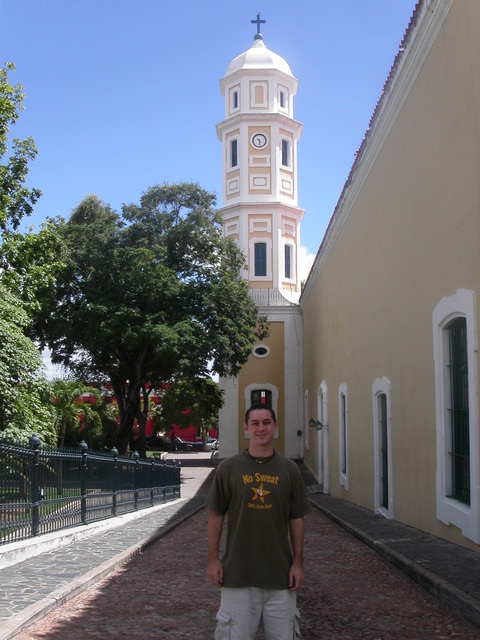
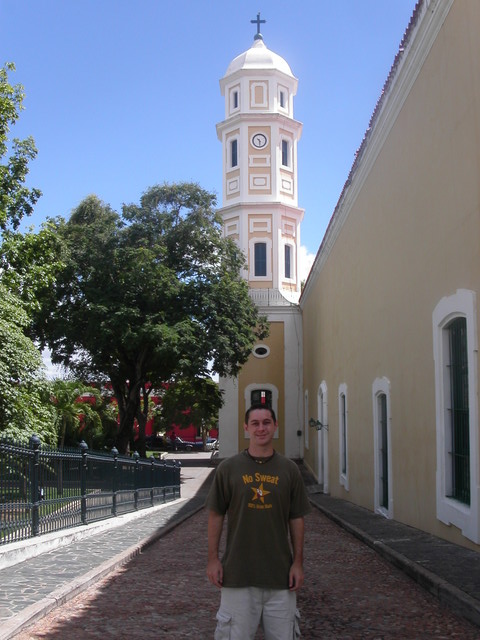
Hola everyone. Saludos from Bogotá, Colombia. Much has happened since my last entry. I spent a little more time in Caracas before heading out for a couple weeks on a road trip with my friend Danilo, who travels around the country selling architecture books to architects, professors, and students. We went to Puerto la Cruz, Ciudad Bolivar, and Puerto Ordaz, all of which were really hot. My friends say that the petroleum spots are always hotter. All of the places were really cool. We checked out the colonial section of Ciudad Bolivar. The central plaza was beautiful (see pic to the right). On the way out we stopped for a couple pics of a river, which I forget the name of, but starts in Colombia and flows into Venezuela. In Puerto Ordaz we spent one Sunday in a couple of parks which were amazing. We saw little monkeys playing in the trees and running around like little dogs on the ground. The trees had huge bases. And in Parque Llorizna we felt the spray of the river as it crashed over the rocks, and saw a ton of huge fish eagerly awaiting the doritos and crackers that the local and international tourists through in. A US tourist was standing next to us at one point and said "Buena vista, verdad?" in a thick gringo accent, and I answered him in Spanish for fun. Those moments of passing for a local are always entertaining. After the road trip, I spent a week more in Caracas, with the most notable event being that I was able to buy my absurdly expensive growth hormone medicine for a less absurdly expensive price in Venezuela (normally $2,000 a month in the US without health insurance).
After realizing that my 90 days in Venezuela was expiring a couple days earlier than I had thought (May and July having 31 days threw me off), I took an overnight bus from Caracas to the Venezuelan-Colombian border. It normally takes about 12 hours, but with Friday night traffic and a slow driver we got there in 15. I caught 3 sub par movies in English. It probably would have been nicer if they didn’t show us Final Destination at around 10pm before we headed off into the dark unknown. A friend met up with me in the border town, San Cristobal, and we took a cab to actual border (about 30 minutes I think), where I got out and got my passport exit stamp without a problem. We then took a bus to the Colombian Departamento Administrativo de Seguridad (DAS). The customs worker initially gave me a 60 day tourist stamp by accident, but after asking with a smile he smudged the 60 days out of my passport, redid it, and gave me the 90 day maximum stamp that us gringos norteaméricanos are allowed, accompanied by a comment by the next guy in line who said “Anything is possible in Colombia.” I can extend it for one month more at the embassy if I choose too, probably for a small fee, but the initial 90 days are free. After leaving DAS, we literally walked across the border, the first time that I’ve walked into another country. Unfortunately my camera was packed away in my suitcase.
I spent a few days in the Colombian border city of Cúcuta, where it was a sweating 40 degrees Celsius. At night it was beautiful though, and the city is pleasant and pretty. I saw the Colombian movie Soñar No Cuesta Nada, which was good and I could understand most of it. I also checked out the city center and bought a rip off cologne for nice and cheap. After that I headed to Bogotá on another equally long bus ride with my friend Yasmina. The road was very bumpy and curvy given our treck was through the mountains. I got to Bogotá 5 days ago and reunited with my friends María, Tania, and Jose Danilo, all siblings. I’m currently staying with them in their apartment while we await the arrival of their parents and perhaps some other visitors in the next week or so. In the meantime we’re looking to buy the family a computer, complete with pirated operating systems and software, which is basically necessary down here because the people generally can’t afford the expensive licenses that seem so standard for us in the States. In one of the commercial centers there are literally about 100 businesses clustered together, all of whom assemble computers based on the purchaser’s desired specifications. The major problem is making sure you don’t get stuck with used hardware when they assemble it, so we’ll have to be vigilant.
Today is a national holiday, although the few Colombians I have asked don’t seem to know much about it except that it is a free day from work or school. So, I will have to start my job search tomorrow. I may have an opportunity to get a full time volunteer post working in the office of an ecumenical social justice network, perhaps with some opportunities to do the human rights accompaniment work I have been interested in for awhile, but I’m not sure if I’ll financially be able to make it unless I give a few private English classes on the side to some of the richer university students in the neighborhood. I’m also thinking of doing some fundraising if the opportunity works out. If not, I’ll probably look for jobs teaching English, which seem to be available here judging by the classifieds section in the newspaper. Other than that, I am getting to know the city. I got my city map from one of the artisans’ street markets in the city center for a buck or so, along with some other goodies. The city center was nice, and I’ve already walked around twice, once with Yasmina and then again yesterday with my friend Pei, who I initially met in Mexico but who I randomly met up with in El Salvador and now here. We might check out a couple of museums later this week if I have time. Bogotá is famous for its emeralds and flowers among other things. The country is loaded with natural resources. Perhaps one day they’ll have a more stable political situation to benefit from them more.
Wednesday, July 12, 2006
Traveling through Venezuela

Hola chamos y chamas from Puerto la Cruz, Venezuela, a port city on the Carribean coast. Driving up here through curvy roads under overcast skies, we say the grayed water to the left, and lush green mountains graced with strips of bright white fog to the right. Palm trees and all sorts of tropical plants and flowers glistened with water despite the lack of sunlight. The shades of green are amazing.
The last few weeks I have had the pleasure of getting to know Venezuela. With my friends, I have taken long rides, yes, in an SUV, cramming as many
 as 8 people with luggage and extra cargo, resulting in all sorts of unpredictable seating arrangements. We fill the 100 liter tank for less than 3 bucks and we're off, slightly polluting the beautiful landscapes we pass through. Venezuela is filled with green mountains, interspersed with even brighter green fields and plains. I'm slowly putting up pics in my online photo album.
During these days I have had many new experiences. I have been to the smallest colonial town I have ever seen, Jají (see first picture above). After an afternoon there, we headed back to the briskly breezy college city, Mérida, where we took the longest and highest Teleferico (lift) ride in the world, eventually ending up on the peak of the snow-covered mountain (see 2nd pic). My friends had their first ever snowball fight, and I tought them to yell out "Snowball Fight!" before chucking their first one. We also spent one day at the zoo, and watched them feed the baby leopards. A small chimp pozed for me. I wore a snake Britney Spears style. The huge lama didn´t spit at us. The waterfalls were beautiful.

A few days later we changed places and climates completely, crossing from Puerto la Cruz by ferry to get to Isla Margarita. There we saw crystal clear Carribean water flowing against usually soft, white sand. We went to the beach almost every day, and I had my first kiss in the Carribean, or any sea for that matter. I also chopped a coconut to obtain the water for the first time. It would have been nicer to have a machete instead of the small, dull kitchen blade with which I was supplied. I drove illegally for the first time, without a license in the small town in order to pick up some bread and beer for the family--yes that's right. But this didn't quite compare to the two hours I spent driving illegally on the highway a few days later (see 3rd pic), passing slowly over the speedbumps at the police and national guard checkpoints. The flexibility with the law is slightly different here in Latin America.
For now I´m heading back to the hotel in Puerto la Cruz. Even though we just left a week ago, we came back because my friend Danilo has more clients here to sell books to. We might head back to the beach one day before heading back to Caracas for a couple days, and then it's off on another road trip. A little more of Venezuela and then off to Bogotá in about 3 weeks.
Tuesday, June 20, 2006
A Month in Caracas
i actually wrote this sometime last week, but didnt get to post it before the cyber closed...so here it is now...
------------
So i´ve been in Caracas, Venezuela for a month now. It was a bit rocky at first, as I had a slight problem with my ticket during the transfer in Costa Rica, so it wasn´t as cheap to get down here as I had originally planned. But still, it´s quite amazing how cheap it is to fly from New York or New Jersey to Caracas. If you´re planning to go to South America sometime, try looking for flights to Caracas first and then a transfer to wherever else you´re going, and then compare that with fares that don´t have a Caracas transfer.
So, after arriving in Caracas and passing through customs without any questions asked, which is quite lucky I´ve been told, I was greeted by Danilo and Mercedes, who have been my wonderful hosts up to this point. I originally met Danilo and his daughter, Maria, in Guadalajara, Mexico, where I was taking a Teaching English as a Foreign Language (TEFL) course and where Danilo was attending an international book fair to get the latest architecture books for his business in Venezuela and Colombia. I walked them to an OXXO (Mexico's 7-11) on their first night, and found out that Danilo, although being 62, is trying to learn English for fun, and he was and is doing quite well considering he has been learning purely from listening to books on tape. Maria has taken some classes as well, and she's doing excellent too, although they both struggle with understanding English at full speed and with all of the idiomatic expressions and verbs combined with every possible preposition. I´m glad I learned English as my first language, even though it's quite difficult to remember to use all of the correct verb conjugations in Spanish during conversations. As for my language abilities, I´m doing well. Some days I stop and think that I never imagined being in this situation, being able to converse, albeit somewhat limitedly, in all manner of situations with different people. Other days, when I hear someone new speak and can´t understand a word, literally, I feel the mountain of progress I have to make. But, as they say here, poco a poco.
So, as for life here in Caracas, it has been good for a number of reasons. I feel a part of the family here. Danilo, Mercedes, and Maria have treated me kinder than would seem possible. They include me in everything, have incredible patience with my Spanish, try to help me learn more, and show me great affection. In addition, they pay for everything, as they've told me that my ATM card won't work in the ATMs even though they have a Visa symbol because President Chavez made it so that US dollars can't be exchanged in the country. It's good that I'm here for the political education because I'm learning a few things about Chavez that I don't like, although I have to confirm all of it, for example, that he rewrote the constitution to allow himself to be reelected for 30 some years. He still has to be elected, but Danilo said that he is on a list of people who didn't vote for Chavez, or perhaps that have declared their opposition to him. And supposedly the literacy education programs are really communist education films with a strong anti-US slant. I have to check it all, but I wouldn't be surprised. Chavez strikes me as quite an extreme character, just like the nut we have in office at home. It's actually a shame if he's wasting an opportunity to use the wealth of the country for good things because he's going to give ammunition to the already narrowminded extreme right in the States. I still think, as I've thought for awhile, that having a social democracy would probably solve more economic and social problems than a completely capitalist or socialist state. Socialism with liberty as I've heard it said before.
In any case, I haven't kept up with politics very much this month. My internet time is limited as I basically go when the family goes and for the same time that they go, so if they go for a half hour that's what I have, and I try to get through my emails and whatever else I need in that time, hence the lag in putting up this entry. During the days I usually spend an hour or so tutoring Maria in English, although it really depends on what the family is doing that day, as they might have errands or something to do with a friend or whatever. But during the day we speak some in English and some in Spanish, which is good for both of us. When Danilo isn't on a business trip, we do the same with him. I basically speak all Spanish with Mercy, although she has learned a few phrases, such as "Get out of my kitchen!," or the abbreviated "Out of my kitchen!," or the Spanglish versions "Fuera de mi kitchen" and "Out of mi cocina," etc, for when I get caught washing the dishes when she's not looking. I try to do some chores every once and awhile when I can, although I know they want to treat me as a guest and not have me do anything. But it's difficult not to help out a little. They're remodeling another apartment that they're going to sell, so I helped pull up some tile and smash small holes into the concrete foundation so that the new tile would stick better. Doing little things like that and helping with the English makes me feel good because I want to give something back to this family that is giving me so much. They've even offered to take me along with them when they move to Bogota, Colombia in a few weeks, and to help me get started finding work and obtaining a visa. I´m contemplating all sorts of options, but I'll write more on that later when I know more.
For now the Cyber is closing. I´ll head back to have dinner with the family, maybe a ham and cheese sandwich as they're quite fond of them. Today I taught them how to make Philly Cheesesteaks, although they told me they have them here, and they're called Pepitos. The best food I've had so far was a Peruvian Papa Rellena in the street, which I could eat every night. Tomorrow I'll try to catch a few minutes of a world cup game during pit stop during our trip to another city, Merida. In a couple weeks we'll head to Isla Margharita off the Carribean Coast, which I'm very excited about. Then in the beginning of July it's off to Colombia, for the second time, as I've already been there once, without papers, for a few days to celebrate Mother's day with the family here in a border town with Venezuela. I learned a little more about fear and how to dance Cumbia so that when I meet Shakira I´ll know what to do. For now, adios y cuidense. Peaceness.
Sunday, April 16, 2006
Illegal at Princeton
this is an amazing story. maybe his case can help change the direction of immigration reform for the better.
Saturday, April 08, 2006
A Few Lefty Articles
Every now and then I check up at a few of the independent media sites. Independent media tends to be left of center, which is an interesting point in itself.
In any case, in a quick skim of the Common Dreams web site, I found a few interesting articles.
First, a commentary on the president of Venezuela's social spending, which many of our leaders have criticized. One other thing the article forgets to mention is that illiteracy has virtually been eliminated from the country, as it has in Cuba. Hmm spending on the poor might actually work!
Also, the US has recently backed out of an election race to have a representative in the new United Nations Human Rights committee. This is probably for the best, as we have a horrible international human rights record, supporting terrorist governments left and right while claiming to be at war with terror. This is an embarrassment for the US, but perhaps one that will wake some of us up to our foreign policy realities.
Third, and interesting article on Wal-Mart's efforts to oppose homeland security efforts in the name of greater profit. While I'm not sure what the low-down is on some of the measures, such as how effective "smart containers" really are, the company's actions speak for themselves.
Check out the main page of Common Dreams for other commentaries and articles...there are many.
Friday, April 07, 2006
My Experiences with Tap Water and Street Food in Latin America
When I told people I was going to Guatemala last summer, most people I talked to had one of two things to say: be careful and/or don’t drink the water. Most people also didn’t know the first thing about Guatemala, including where it was. I can’t blame them. I barely knew where Guatemala was and certainly didn’t know the first thing about its history, culture, or the United States’ government’s role in their 30 year civil war, which just ended 10 years ago. So now I have learned that Guatemala is in Central America, just below Mexico and next to Belize. To the south follows El Salvador, Honduras, Nicaragua, Costa Rica, and Panama. Alter crossing from Panama into Colombia you enter South America. Here’s a map if you’re interested.
So back to the water story. I spent 5 weeks in Guatemala brushing my teeth with bottled water for fear of swallowing just a little bit. When I ordered something with ice cubes I made sure to ask if the ice was made from agua puro. I even shaved with bottled water I was so paranoid from the stories I had heard from my gringo friends and family in the states. I was convinced something really bad would happen if the water penetrated me in any way.
As for food, I was scared after reading about the potential for all sorts of diseases from undercooked or poorly washed food after reading about the health risks in Lonely Planet. It took me 4 weeks to build up the courage to eat something from one of the street vendors, which happened to be a pupusa, a Salvadoran food that I would become much better acquainted with 8 months later in El Salvador. If you’ve never had one, it’s a small, round, fat tortilla stuffed with cheese, bean, and sometimes pork or something else, and melted on a grill or sometimes, if you’re lucky, in a brick oven. It’s one of the tastiest things I’ve had in the 3 countries I’ve been to so far, although it’s hard to match a Mexican street taco with hot sauce and lime. I had my days of diarrhea in Guatemala, but nothing too bad. I never felt sick to my stomach from anything. It’s inevitable that you’re going to pick up new germs in a new place, but I didn’t phase me as much as some others. It just want to show me how different everyone’s body is in what it can take.
So after coming back home and finishing my last social work course, I headed to Mexico with the resolve to eat off the streets, which I did with zeal. Perhaps one of my most favorite activities became eating a late night taco from the cheapest street vendor I could find. Sometimes we were even lucky enough to find those 3 for a dollar hot dog deals. They’re serious about their condiments on the hot dogs down there, which usually come with ketchup, mustard, mayonnaise, tomatoes, onions, and jalapenos. I usually opted for the first two and the last. I even concocted my own 5am special when I got back to the house, a hot dog wrapped in a tortilla with the 3 condiments of choice and melted cheese as an adhesive to keep the tortilla rolled. It’s pretty sweet…don’t knock it til you try it.
Anyhow in Mexico I was still scared of the water. My friend Dan mentioned that he drank 5 glasses in Mexico when he was drunk one time, but we both agreed that the high level of alcohol must have killed the parasites because he didn’t get sick. We were, after all, studying medicine at the time and knew exactly what we were talking about. So I got up the courage to brush my teeth and shave with the faucet water, although it did have a bit of a funky smell to it. And I stopped asking if the ice cubes were made from agua puro, in Mexico called something else that I can’t remember.
I came back home for Christmas with more courage, and a theory – that it was possible to drink the water, my body just needed to become accustomed. My theory was to break my body in slowly, first taking the melted ice cube water and then working up to more. When I came to El Salvador in late January, I was still careful at first. Again, as with the last two countries, I got a little diarrhea as I was growing accustomed to the new bacteria. When I moved from San Salvador to San Francisco Chinameca in early February, I was becoming less worried about it. I ate from local places all the time. In fact, the worst diarrhea I’ve had in all three countries has come from eating at one of the American-style fast food joints. In El Salvador KFC put me on the latrine for a whole morning. In Guatemala it was the one-time trip to McDonalds and I think the same in Mexico. And I got worse diarrhea when I returned to the states and made my first meal greasy friend chicken tenders and fries from the diner. My body had apparently been accustomed to eating healthier and the Jersey grease was a shock.
So, back to my water story. I realized after a few days at the house in Chinamequita that I had been drinking the wrong Sunny D type orange drink, the one that was made with agua potable (potable water), and not the one made from agua filtrado, the “safe” kind. I even drank the refrescos made at the house with the water from the tap. This took a little getting used to, but I was never sick from it. Still, I had a theory that the reason I could drink the Sunny D potable water drinks was because they must be made with a higher standard potable water in order to sell throughout the country. Another scientific fact directly from my medical background. However, last weekend, we hiked up a volcano, which took us 5 hours to climb and another 2 and a half to descend. The view from the top was wonderful and worth the walk, but it took a lot of energy to say the least. On the way down I was parched and out of my bottled water, so I figured what the heck it was time to go for it. I took a few swigs of the potable water, which had been taken directly from the spicket in Chinamequita. A little later I drank more, maybe 15 or 20 ounces in total. I still was a little scared, but nothing happened. I have now succeeded in becoming accustomed. Of course, it’s still probably not the best water to drink, and there was a cholera outbreak in Chinamequita about 6 years ago, resulting in some deaths. But when there aren’t any other options or when I’m drinking refrescos, a juice like drink made from water and crushed fruit, I know I shouldn’t have any problems.
So, all of my talk of water and my stomach problems is to tell you about my experiences, and perhaps shed some light on the hype. Most people think you’ll outright die or get severely sick from water or food in Latin America. For many people, this indeed happens. I think I have a stronger stomach than most, probably because I don’t take as much care with washing my hands all the time before eating, vacuuming the house, or other normal US habits. It’s my theory, again, grounded in empirical medical research that I’ve become famous for in the medical community, that if you’re not overly clean in the States, you’ll build up your system a bit. Of course, I’m sure everyone’s body is different, but I think we all have the capacity to build up our systems. So when someone tells you it’s impossible to drink the water in Latin America, tell them you have a silly gringo friend named Rocky who’s been doing it for a couple months without problems. As weird as it might sound, I think this story has some consciousness-raising value. We don’t learn much about Latin America, or the rest of the world for that matter, in the States. At least, we didn’t in my K-12 experiences, and if I hadn’t studied Sociology and made an effort to read on my own, it’s possible I could have went through most of college without learning much as well. So here is one lesson, you won’t necessarily die from food on the street or water from the tap. One more stereotype we can break.
A Trip to an Ecuadorian Drug Prison
below is an email that i received from a friend currently traveling latin america. we lived in the same house for a week in mexico, met up once in el salvador, and might even run into each other again if we both make it to colombia around the same time! how interesting it is to travel, for so many reasons.
in any case, her email about her experience visiting a prison for alleged and convicted drug traffickers in quito, ecuador. i found it really interesting and thought i'd pass it along...thanks for your permission to post it pei!
-------------------
Original Email
-------------------
Greetings from the equator line!
Hola mis amigos!....I just had the most amazing day of my travels so far, and I say this without any reservations. It was definitely one of the most interesting days of my life!!! So.....today we spent the whole day visiting foreign inmates in Ecuador prisons that are in for drug trafficking. Well, fact is there are over 100 foreigners in Ecuador prisons and 99.9999999999999999999999% are in for drug trafficking or consuming.
WOMENS PRISON
Okay, so we started our day with a visit to the womens prison. It was such an awkward moment for us, there we were 5 foreigners standing around laughing and talking about the amusement factor of being able to do something like this whilst not realising that for everyone else in line this was their reality. We came bearing gifts in hand of cigarrates, tampons, pads and chocolates. The majority of persons waiting outside were men and children. The sweetest thing I saw was one man brushing his hair just before entering. Female and male visitors waited in separate lines. We are so eager to meet Zoey from Ireland. How it works is you dont have to pay anything to go in, as long as you know the name of an inmate inside. Once we were in, we were padded down thoroughly, and I mean THOROUGHLY. I distinctly remembered just after entering, seeing the jail looking with apartment complexes in poor neighbourhoods,all the guards in their full military outfit with salsa music playing in the background - at that point I thought IM IN SOUTH AMERICA DUDE!!!!!!
When Zoey first appeared, she wasnt what I was expecting. She looked like a matured lady in her 30s. We were standing in the stairways talking for a fair bit about how she got there. She was a BBC reporter who had gone to Columbia and Ecuador for the first time in her life to do a documentary on the drug trafficking business. On the day at the airport in Quito, her name was announced over the PA, she thought there was a complication with the flights or something. It turns out, they were arresting because the camera equipment was completely laced with cocaine. The three cameramen had fled the scene by then, all the bags had been checked under her name. She fainted. Whats worse, one of the men had been her best friend for the past 11yrs and the godfather of her children. All her rights were stripped. There is no law here. It was not till a month after being detained that she made her first contact with anyone, her husband. Not even the consulate up until that time. Hearing her story made our stomaches churned.
Shes been in jail for three years with a 8yr sentence. But with all hope, she will be repatriated back to Ireland next month (if not she will have to serve the remaining 5 years of her sentence). BBC has been fighting for her case hard, its been covered to the extent that it caught the attention of Oprah. But it had been blocked by Ecuador officials because of all the media exposure and public suppórt she would gain from it. She was incredibly inspirational, writing a book about her experience, staying positive the whole time. There are another 30 or so other foreign girls in there for drug trafficking, only two of them are innocent. Most of them have given up hope and succumbed to a lifestyle of an addict, choosing to live in the worst quarters of the prison because thats the only place you are allowed to do drugs. Drugs is readily available inside the jail, they are brought in by the prison guards themselves!!!! Theres no shame in that for them.
Zoey is lucky enough to be living in the quarter where living conditions are better - simply because everyone must pay for their room. There is a housing renting system inside. The most expensive room goes for US$3000. For the Ecuador women, and most of the foreigners inside, they live in rooms big enough for two ppl but fitting 8 or 9 inside, and thats not including the children that live inside the jail with their mums. The most heartbreaking thing is knowing that once these kids turn 12 they will be kicked out of the jail and become streetkids. There are little food vendors, a general store and even an ice cream stand inside the compound. Everything, everything costs money inside the jail for these women, toilet paper isnt even provided!!!!! With drugs and money of course fuels rivalries, you pay for protection if you are not part of a gang and as told by Zoey, stabbings are a daily occurence. The story of a Columbian girl not being able to pay for her food of US$4 had her eyes gauge out by a knife. The guards do not do anything about the fights.
We spent the day with Zoey talking about the whole drug business, US foreign policy is unavoidable on this issue. Judges in Ecuador are under a lot of pressure to put away anyone caught with drugs on them, proven innocence or not it doesnt matter. The fact is the US awards judges with money, visas to US if they do their job. How disgusting.
Back to the men in lines......the men in line are not necessarily there to see anyone in particular. They come bearing gifts of rice, potatoes or anything else and stand in the courtyard, if a girl wants a particular commodity she will approach him and exchange it for sex. That came as a shock to us. Inmates can then rent out rooms for US$10 for them. That was disgusting too.
When we left Zoey Savage, we were just blown away by her story, courage and her faith. She was also three months pregneant. If anyone is interested, her book is called Fight for Freedom. It will be publish in the future.
MENS PRISON
Now....after hearing the personal story of a woman inmate we headed off to the mens prison to visit a friend of Zoey. His name was Tony from Nigeria. When we arrived, it was just so creepy. When we went to the womens prison, we didnt get that feeling because it didnt look like a jail. But this, this did! Walking through the initial corridors with all the inmates lining up on the side, playing pool, eyeing us, it was uncomfortable.
Tony greeted us with his friend and they were so hospitable. Providing us with snacks and drinks. They had been waiting eagerly. His friend ran a general store from his room. This visit was distinct from the women prison in the sense that we met so so many inmates inside from every corner of the world and talked to them about the life inside the prison. Unlike the women prison, there are guns and machetes inside. The foreigners inside range from the ones that kept a very low-key profile to the ones that were well.....shifty really. The ones that have earned their respect from the locals. The shiftiest of all was definitely this guy from Canada. He didnt want to talk about his experiences but was more than willing to show us around the compounds and talk about prison life. Masima from Italy amused me, he had a smile on his face and instead of choosing to pay for a room in the well off quarter (where most of the foreigners are) - he chooses to live in the quarter with the Ecuadoreans. I talked to him quite a bit and he told me that it was better to keep your enemies closer. In both of these jails, there is so much freedom. All day long they are allowed to roam around out of their rooms - this is not what I had imagined! There are no cells with bars!!! They have cabled TVs, entertainment units, dvd players and a big prison shake em down party every two weeks when women are allowed to stay for the night. Of course, the risks are pretty high. Stabbings are a daily occurring, interestingly enough every quarter has a King, an inmate who is the unofficial authority, we were told one of them are shot two weeks ago by his own fellow inmates and there will be a vote soon for the next King. It was just so so interesting. I even met a Chinese Malaysian inside there!!!!....we met and talked with a lot of them, even the Russian mobster was there! Then we were told we should leave soon because there was going to be prison riot soon. With that, we said our goodbyes and walked out eyeing the delicious food stands inside!
All and all - we couldnt stop talking it all in the cab ride back home. It felt so surreal, especially being in the mens prison. It was a dangerous place to be, for us girls it was fine - we just got undressing looks and whistles but the guys well, they were freaked out being fronted by some of the inmates. There are no guarantees inside. But, that is one thing that I can tick off my list of things to do after reading the book Marching Powder. Although, set in Bolivia this came pretty close to it. These societies are fucked enough on the outside, seeing it in the inside (its a jungle!!!!!) we all came away asking each other so how long do you think you would be able to survive in here?...
Sorry this has been long - but I felt compelled to write about my amazing day before it slipped from my mind. Thanks for reading guys!
Subscribe to:
Posts (Atom)